
As boys move from childhood to adulthood, their bodies and minds go through many changes. This stage, called puberty, usually begins between ages 9 and 14, but it can vary from person to person. Understanding these changes helps boys feel more confident and prepared. A diagram of puberty changes in boys can make these concepts clearer, but it’s important to explain each change in detail for full understanding.
Physical Changes Shown In Puberty Diagrams
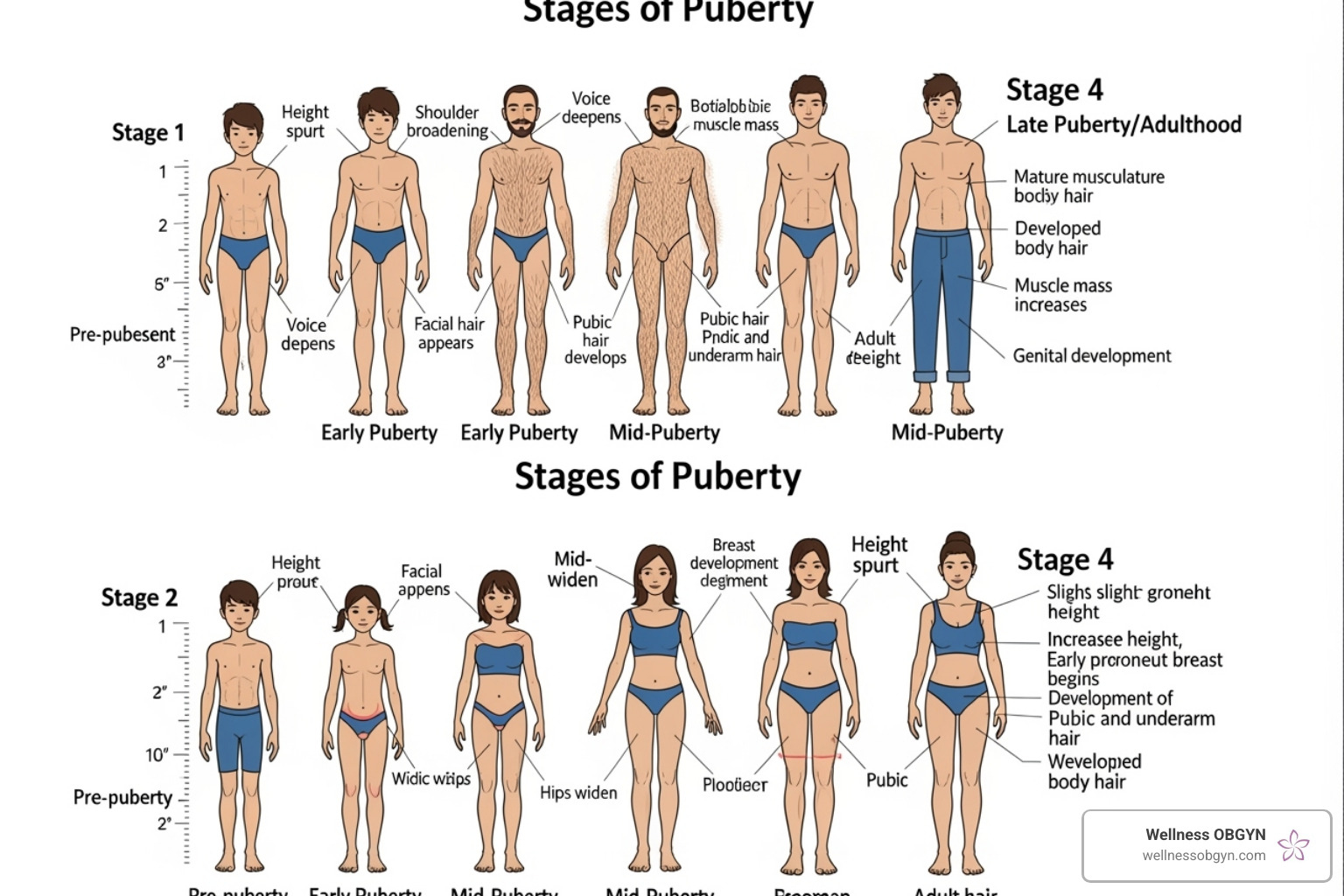
A typical puberty changes in boys diagram highlights several key body changes. Here are the main changes you’ll see:
1. Height And Muscle Growth
Boys often grow taller quickly during puberty. Some may gain 7–12 cm (about 3–5 inches) each year for a few years. Muscles also become more developed and the shoulders broaden.
2. Voice Deepening
The voice box (larynx) grows, and the vocal cords lengthen. This causes the voice to “crack” and then become deeper.
3. Facial, Pubic, And Body Hair
Hair appears above the upper lip, on the chin, underarms, chest, and around the genitals. At first, this hair is fine and light, but it becomes thicker over time.
4. Growth Of Penis And Testicles
The testicles and penis increase in size. This is often one of the first visible signs.
5. Skin And Sweat Changes
Glands in the skin become more active, which can lead to oily skin and acne. Sweating increases, and body odor can become noticeable.
6. Breast Swelling
Some boys experience a small, temporary swelling under the nipples. This is called gynecomastia and usually goes away on its own.
Here is a summary comparing the timing of these changes:
| Change | Average Starting Age | Visible Duration |
|---|---|---|
| Height Growth | 10–14 years | 2–4 years |
| Voice Change | 11–15 years | 6–18 months |
| Facial Hair | 13–16 years | Varies |
Emotional And Social Changes
Puberty is not just about physical growth. Boys also experience new feelings and mood swings. Common emotional changes include:
- Increased independence
- Interest in dating and romantic feelings
- Occasional anger or sadness
Some boys feel self-conscious about their changing bodies. It’s normal to compare yourself with friends, but remember, everyone develops at their own pace.
Credit: wellnessobgyn.com
A Closer Look: Stages Of Puberty In Boys
Doctors often use the Tanner stages to track puberty. Here’s a simplified overview:
| Stage | Main Changes |
|---|---|
| 1 (Prepubertal) | No visible signs yet |
| 2 | Testicles and scrotum grow, first pubic hair appears |
| 3 | Penis growth, more pubic hair, height spurt begins |
| 4 | Facial hair, voice deepens, continued growth |
| 5 (Adult) | Adult body hair, full genital growth, growth slows |
Insights That Many Miss
Many boys are surprised when they notice one testicle growing before the other. This is normal, and both usually even out. Another common concern is the start of acne. It’s not only about hygiene; it’s mostly caused by hormones.
Most diagrams do not show that emotional changes are a big part of puberty. Learning to manage feelings is as important as understanding body changes.
Credit: www.twinkl.com
When To Talk To A Doctor
If puberty starts very early (before age 9) or very late (after age 15), it’s a good idea to talk to a doctor. Also, if changes are very uneven or cause distress, medical advice can help.
For more details on puberty stages, you can visit the Wikipedia page on puberty.
Frequently Asked Questions
What Is The Average Age Boys Start Puberty?
Most boys start puberty between ages 9 and 14. The timing can be different for each person.
Is It Normal For Boys To Grow At Different Rates?
Yes, every boy has his own pace. Some may grow quickly, while others take more time.
Why Does My Voice Crack During Puberty?
Voice cracks happen as the larynx grows and vocal cords lengthen. It’s a normal part of the process.
Will Acne Go Away After Puberty?
In most cases, acne improves when puberty ends. Good skin care and, if needed, medical treatment can help.
Should I Worry If One Testicle Is Bigger Than The Other?
It’s common for one testicle to grow before the other during puberty. If you feel pain or a hard lump, see a doctor.
As you move through puberty, remember these changes are a normal part of growing up. Everyone’s timeline is unique. If you have questions or worries, talk to a trusted adult or your doctor.

Credit: www.amazon.com

